Valorant, what "low cortisol aim" actually means and how to build it
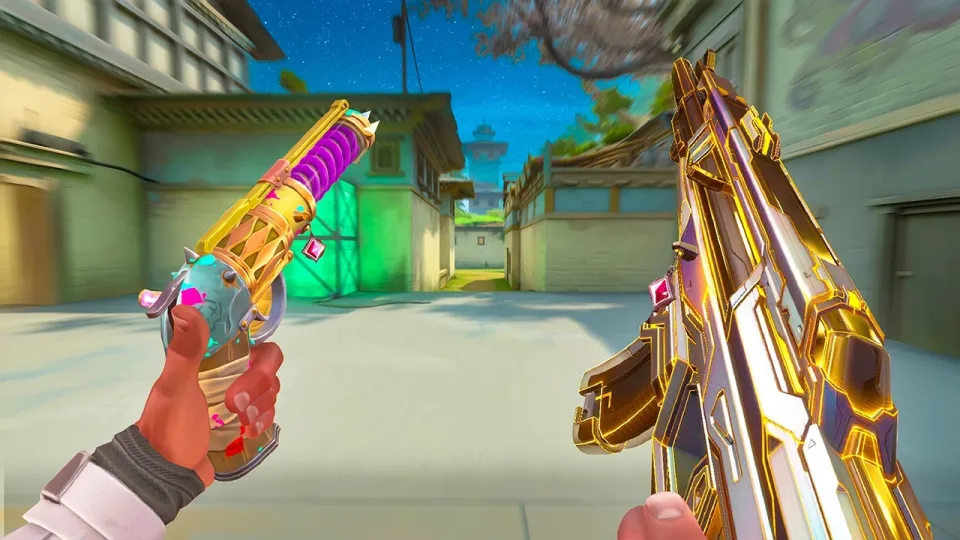
Video: low cortisol aim..
You can order the same kind of articles for your own video to boost it on YouTube and Google. Just message the Telegram bot @sat_sit_bot. It writes articles around your video, embeds the video and publishes them on popular niche websites (no ads). Try it free: 50 articles on us.
Valorant "low cortisol aim" is a way of describing calm, low-tension aiming: steady crosshair placement, minimal wasted movement and duels taken with a plan instead of a panic flick. The phrase comes from a Rawzu Phoenix montage, but the idea behind it is practical — the less stress you carry into a fight, the more of your aim actually shows up on screen. If you want the same starting conditions, the creator points players to PC optimization through Hone, which handles the background side of a stable setup.
What "low cortisol aim" means in Valorant
Low cortisol aim is not a sensitivity, a crosshair or a training routine — it is the visible result of aiming without tension. In Valorant terms it shows up as a crosshair that arrives at head level before the enemy does, small micro-adjustments instead of long swipes, and a player who keeps shooting after the first bullet lands rather than resetting. The label is internet slang borrowed from fitness and lifestyle content, where "cortisol" stands in for stress; applied to aim, it means the opposite of the jittery, over-gripped flick style that many players default to in ranked.
Why it matters mechanically:
- A relaxed wrist and forearm allow finer control at long range, where Valorant fights are usually decided.
- Low tension keeps your grip consistent between rounds, so your first shot feels the same in round 3 and round 20.
- Calm aim survives utility — flashes, smokes and wall-breaks — because you are not already mid-flick when the screen changes.
The Rawzu video leans into this framing with a Phoenix-focused edit: quiet music, clean clips, no shoutcasting. The point is not that the player has a secret technique, but that the clips are chosen to look controlled rather than frantic.
Rawzu's Valorant settings and peripherals
The settings listed with the video are a conventional low-sensitivity tactical FPS setup, and they are worth reading as context rather than as a magic formula. Rawzu plays at 400 DPI with 0.625 in-game sensitivity, which works out to roughly 250 eDPI — a range common among Valorant pros who rely on arm movement for wide turns and wrist movement for small corrections. The resolution is 1440x1080, a stretched 4:3 format that widens player models on screen at the cost of horizontal field of view.
Full list from the video description:
- Sensitivity: 400 DPI / 0.625
- Resolution: 1440x1080
- Crosshair: 1-6-2-2
- Mouse: Logitech G Pro X Superlight 2
- Mousepad: Artisan Zero Soft
- Monitor: Zowie XL2566K, 360Hz
The hardware choices line up with the "calm aim" idea: a light wireless mouse, a control-oriented cloth pad rather than a speed pad, and a high refresh monitor that makes small corrections easier to read. None of it is required to aim well, but a control pad in particular reduces overshoot when you are making the tiny adjustments that low-tension aiming depends on.
Phoenix as a low-stress duelist
Phoenix suits calm aim because his kit removes reasons to panic. Curveball is a flash that curves around corners, so you can blind a defender holding an angle without exposing yourself first; Blaze gives you a wall that blocks vision and damages anyone who walks through it, letting you take space on your own terms. Hot Hands adds a molotov-style zone that heals Phoenix when he stands in it, and Run it Back gives him a free second life if a duel goes wrong.
The practical effect is that Phoenix can start fights with information and utility rather than raw reaction speed. A typical clean sequence looks like this:
- Wall off the sightline you do not want to fight (Blaze).
- Flash the close angle with Curveball so the defender cannot hold it.
- Clear the remaining angles with your crosshair already at head height.
- Use Hot Hands to heal chip damage and deny a retreat path.
- If the site collapses, Run it Back lets you re-enter instead of dying for the attempt.
Because the flash and wall do the stressful part, the aim you need is short and repeatable — which is exactly the kind of shot that looks "calm" in an edited montage.
How to train calm aim instead of reactive aim
Training low-tension aim is mostly about removing bad habits, not adding new drills. The goal is to make the correct movement the default so that under pressure you do not have to think about it. Three things matter more than raw flick speed:
- Crosshair placement first. Walk every map with your crosshair at head level along the next likely angle. Most "aim" failures in Valorant are placement failures, not reaction failures.
- Shorter swipes. In the Range and in deathmatch, stop practicing long flicks and practice 10–20 degree corrections. That is the range where real duels happen.
- Grip and breathing. Loosen your mouse grip between rounds, keep your forearm on the desk and breathe out before you peek. This is the literal "low cortisol" part.
A short routine that fits the idea: five minutes of head-level tracking on static bots, five minutes of strafe-and-stop counter-strafing, then one deathmatch where you only take fights you have set up with utility. Repeat daily rather than in one long session.
Common questions about calm aim and stretched resolution
Viewers of the Rawzu video raised a few recurring doubts, and they are worth answering directly because they come up in almost every aim discussion. One is whether a stretched resolution like 1440x1080 actually improves aim — the honest answer is that it changes how models look, not how good your mouse control is. Wider models can help some players spot heads faster, but the trade-off is less peripheral vision, and plenty of top players use native 16:9.
Another is whether low sensitivity is required for calm aim. It is not: 400 DPI at 0.625 is a comfortable arm-aim range, but wrist-heavy players do fine at higher eDPI as long as their grip stays relaxed. The more common issue is players copying a pro's sensitivity without matching their desk space or mousepad friction.
The third recurring question is about tension itself — why aim falls apart in clutch situations. Usually it is because the player is holding their breath, gripping hard and pre-flicking before the enemy appears. Fixing that is a habit problem: slow down your first peek, let the enemy walk into your crosshair, and accept that some duels are lost regardless of aim.
Useful links
- PC optimization for Valorant: https://hone.gg/a/rawzu
- Rawzu's original music on Spotify: https://open.spotify.com/artist/6DbATPR1PTNMx7U918bg1Q
- Rawzu Discord community: https://discord.gg/axnFwyvxp3
Final thoughts
Low cortisol aim is a useful label for something simple: aim that is not fighting itself. Rawzu's Phoenix clips work as a demonstration because the agent's kit — Curveball, Blaze, Hot Hands, Run it Back — lets a player set up fights instead of reacting to them, and the listed settings (400 DPI / 0.625, 1440x1080, control pad, 360Hz) give that style a consistent base. Copy the habits before you copy the numbers: head-level crosshair, short corrections, relaxed grip. The channel Rawzu deserves the credit for the framing and the footage; the improvement is yours to build. Start with Hone if your frame times are the thing breaking your calm.
Key takeaways
- Rawzu runs 400 DPI at 0.625 in-game sensitivity on a 1440x1080 stretched resolution.
- Crosshair code 1-6-2-2, Logitech G Pro X Superlight 2 on an Artisan Zero Soft pad, Zowie XL2566K 360Hz monitor.
- "Low cortisol aim" is a framing for low-tension, low-stress aiming rather than a mechanical technique.
- Phoenix pairs Blaze walls with Curveball flashes so he can take duels without panic-flicking.
- Hone (https://hone.gg/a/rawzu) is the PC optimization tool promoted alongside the video.
Source: low cortisol aim.. · Markdown version
Questions & answers
What does "low cortisol aim" mean in Valorant?
It is slang for calm, low-tension aiming: steady crosshair placement, short corrections and duels taken with a plan instead of a panic flick. The term borrows from lifestyle content where cortisol stands for stress, and it describes how aim looks when a player is relaxed rather than over-gripping the mouse.
Is Rawzu's sensitivity good for beginners?
400 DPI at 0.625 (about 250 eDPI) is a reasonable starting point if you have desk space for arm movement, but it is not mandatory. Beginners should adjust sensitivity until a 180-degree turn feels comfortable without lifting the mouse repeatedly, then keep it fixed for weeks.
Does stretched resolution like 1440x1080 improve aim?
It widens player models, which can make heads easier to see, but it also reduces horizontal field of view and does not change your mouse control. Many professional players still use native 16:9, so treat stretched resolution as a preference rather than an upgrade.
How do I stop panicking in clutch situations?
Slow down your first peek, breathe out before you swing, and let the enemy walk into a crosshair you have already placed. Practicing short 10–20 degree corrections in deathmatch instead of long flicks also reduces the urge to over-correct when a fight starts.